Carte mondiale de la biodiversité animale et végétale : 20.000 espèces compilées de 1992 à 2012
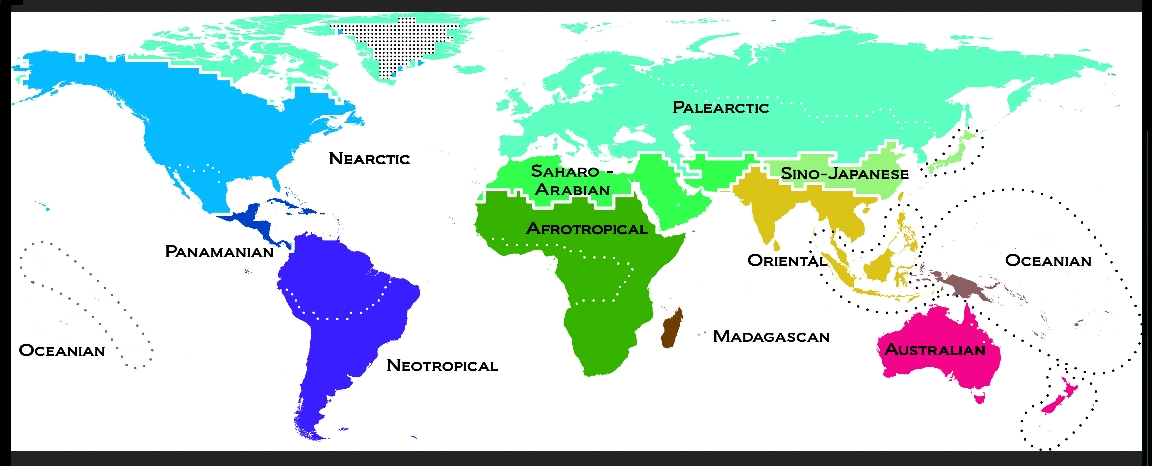
Lors de son centenaire, la carte mondiale de la Biodiversité de Alfred WALLACE (l'auteur binôme de Darwin, et co-inventeur l'évolutionnisme) est mise à jour : elle révèlerait 11 régions circonscrites de biodiversité homogène (sur 11 régions du monde) ...
Cette page n'est pas du tout terminée, l'internaute est invité à revenir en février 2013
Les passages les plus intéressants sont surlignés en rose
| Article Article disponible sur : http://news.ku.dk/all_news/2012/2012.12/wallaces-century-old-map-of-natural-world-updated/ |
|
|
Article original en ANGLAIS
|
TRADUCTION en FRANCAIS
|
| News > All news > 2012 > 2012.12 > Wallace's century-old ... 2012-12-20 Wallace's century-old map of natural world updated Biodiversity Until today, Alfred Russel Wallace's century old map has been the backbone for our understanding of global biodiversity. Thanks to advances in modern technology and data on more than 20,000 species, scientists from University of Copenhagen have now produced a next generation map depicting the organisation of life on Earth. Published online in Science Express today, the new map provides fundamental information regarding the diversity of life on our planet and is of major significance for future biodiversity research. An essential question in understanding life on Earth is why species are distributed the way they are across the planet. This new global map shows the division of nature into 11 large biogeographic realms and shows how these areas relate to each other. The new map. Credit: Science Journal AAAS The new map. Download press picture in high resolution. Credit: Science Journal AAAS. It is the first study to combine evolutionary and geographical information for all known mammals, birds and amphibians, a total of over 20,000 species. Based on the work at the Center for Macroecology, Evolution and Climate at the University of Copenhagen involving 15 international researchers and 20 years of data compilation, the study is published today in Science Express. Credit: Frank Vassen.
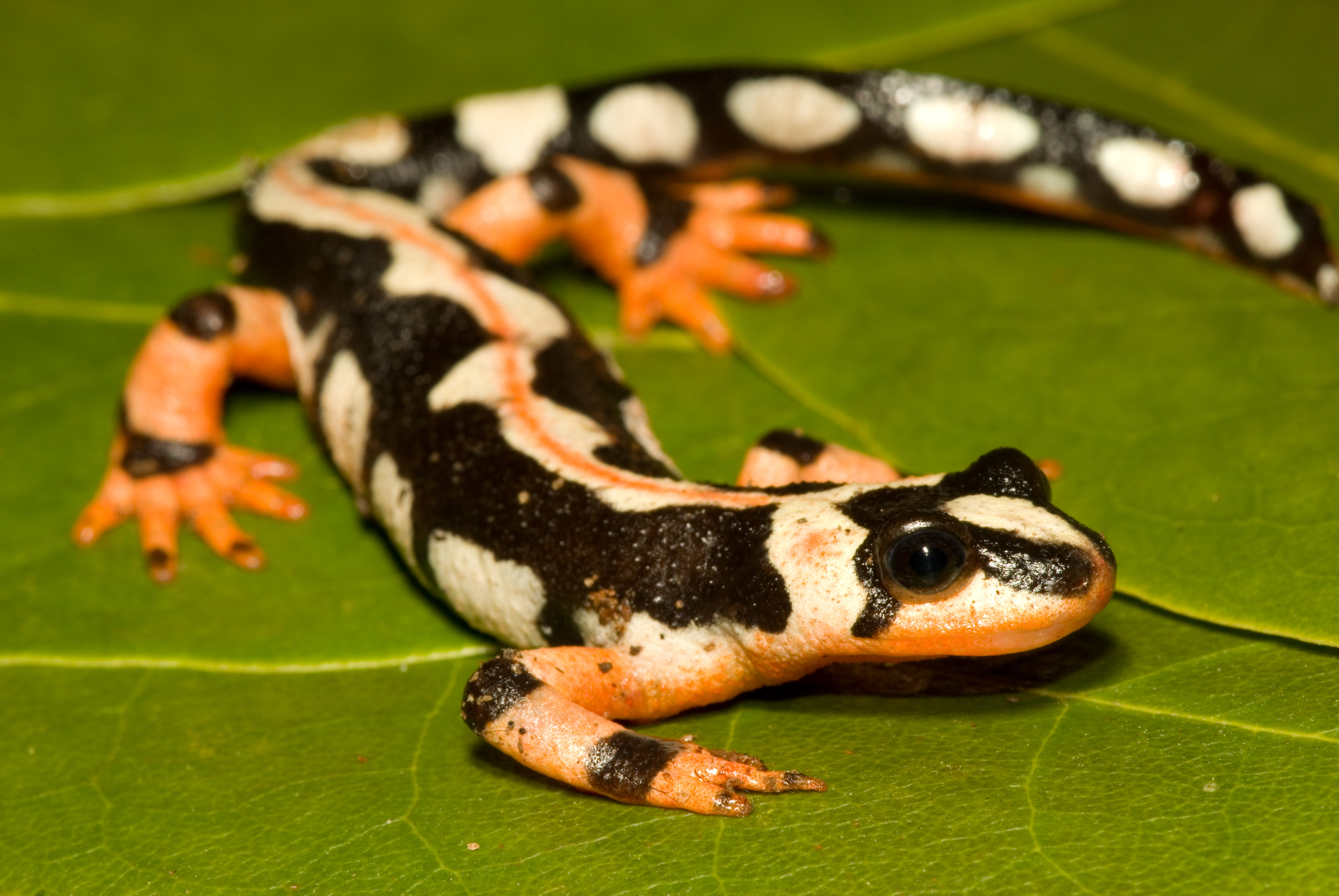
The first attempt to describe the natural world in an evolutionary context was made in 1876 by Alfred Russel Wallace, the co-discoverer of the theory of natural selection, along with Charles Darwin: "Our study is a long overdue update of one of the most fundamental maps in natural sciences. For the first time since Wallace’s attempt we are finally able to provide a broad description of the natural world based on incredibly detailed information for thousands of vertebrate species,” says co-lead-author, Dr. Ben Holt from the Center for Macroecology, Evolution and Climate. The new map can be split into finer geographical details for each class of animals. It is made freely available to contribute to a wide range of biological sciences, as well as conservation planning and management of biodiversity. Hundreds of thousands of records Modern technology like DNA sequencing and a tremendous compilation of hundreds of thousands of distribution records on mammals, birds and amphibians across the globe has made it possible to produce the map: Credit: Twan Leenders.
Download press picture in high resolution. Credit: Twan Leenders. Modern technology like DNA sequencing and a tremendous compilation of hundreds of thousands of distribution records on mammals, birds and amphibians across the globe has made it possible to produce the map: “The map provides important baseline information for future ecological and evolutionary research. It also has major conservation significance in light of the on-going biodiversity crisis and global environmental change. Whereas conservation planners have been identifying priority areas based on the uniqueness of species found in a given place, we can now begin to define conservation priorities based on millions of years of evolutionary history,” says Dr. Jean-Philippe Lessard, the other co-lead-author from the Copenhagen center, who is currently based at McGill University, Canada. Senior author professor Carsten Rahbek, director of the Center for Macroecology, Evolution and Climate adds: “Despite the incredible advances of natural science, we are still battling to understand the underlying laws that govern life on the planet. This holistic description of the natural world that we provide could be a new cornerstone in fundamental biology.” Contact Dr. Ben Holt Phone: +44 7866862865 Dr. Jean-Philippe Lessard Phone: +1 514-398-4455 ext: 6428 Phone: +1 514-662-7855 Professor Carsten Rahbek Phone: + 45 35321030 Mobile: +45 38794860 |
Nouvelles> Toutes les nouvelles> 2012> 2012,12> Wallace centenaire ... La nouvelle carte. Crédit: Science AAAS Journal Crédit: Frank Vassen.
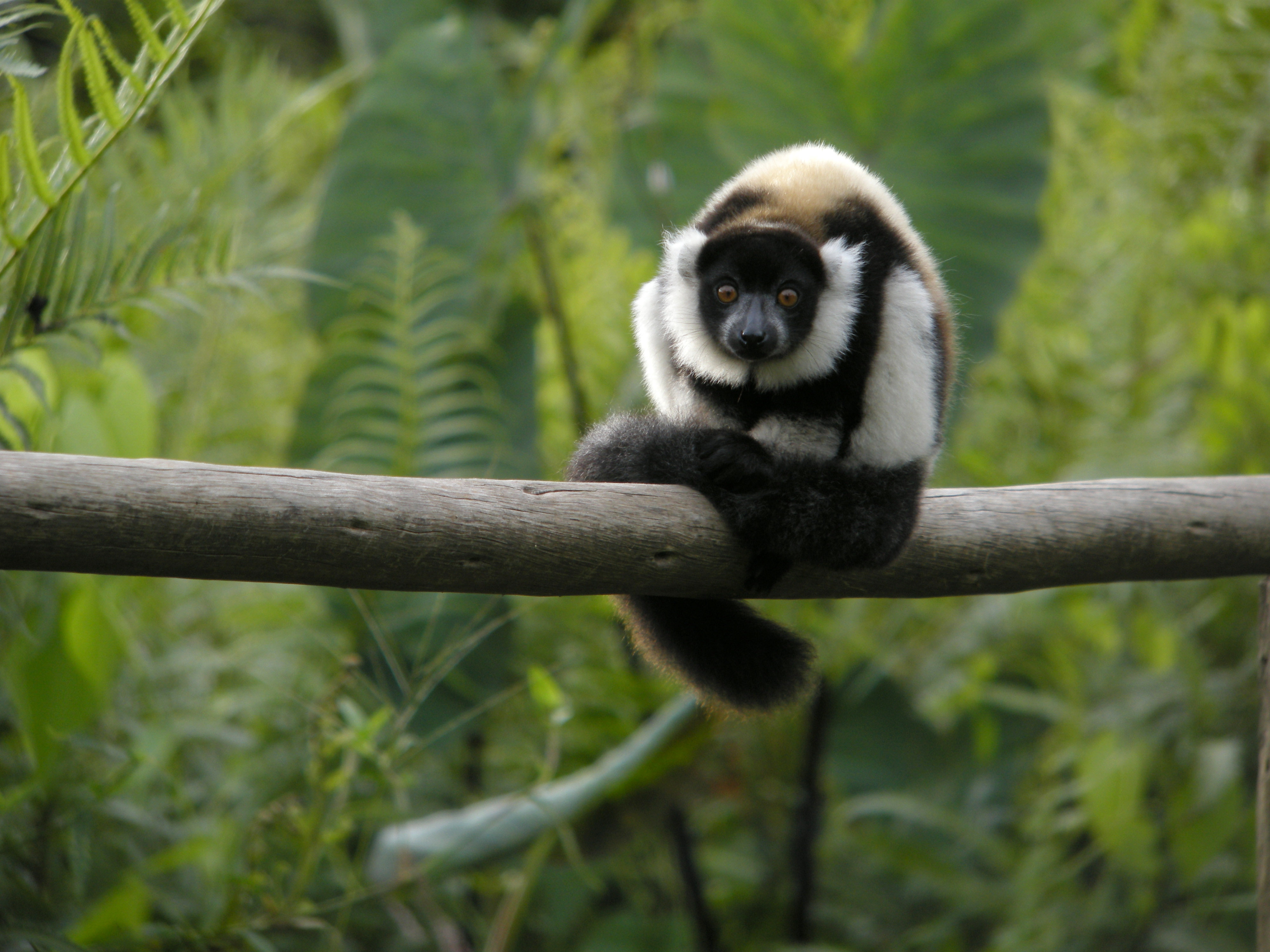
Un lémurien. Télécharger photo de presse en haute résolution. Crédit: Frank Vassen. Des centaines de milliers d'enregistrements La
technologie moderne comme séquençage de l'ADN et une compilation énorme
de centaines de milliers de dossiers de distribution sur les
mammifères, les oiseaux et les amphibiens à travers le monde a permis de
produire la carte: Crédit: Twan Leenders.
"La carte fournit des informations de base importantes pour la recherche écologique et évolutif avenir. Il a aussi une signification majeure pour la conservation à la lumière de la crise de la biodiversité continu et les changements environnementaux mondiaux. Alors que les planificateurs de la conservation ont été identification des domaines prioritaires sur la base de l'unicité des espèces trouvées dans un lieu donné, nous pouvons maintenant commencer à définir les priorités de conservation après des millions d'années d'évolution », explique le Dr Jean-Philippe Lessard, l'autre co- plomb-auteur du centre de Copenhague, qui est actuellement basé à l'Université McGill, au Canada. L'auteur principal, professeur Carsten Rahbek, directeur du Centre pour Macroécologie, Evolution du climat et ajoute: «Malgré les progrès incroyables de la science naturelle, nous sommes encore aux prises de comprendre les lois sous-jacentes qui régissent la vie sur la planète. Cette description globale du monde naturel que nous fournissons pourrait être une nouvelle pierre angulaire de la biologie fondamentale. " Contacter Le Dr Ben Holt Téléphone: +44 7866862865 Dr Jean-Philippe Lessard Téléphone: +1 514-398-4455, poste: 6428 Téléphone: +1 514-662-7855 Professeur Carsten Rahbek Téléphone: + 45 35321030 Mobile: +45 38794860
|